To spot bad authentication plans, testers can execute binary assaults against the mobile app while it is in ‘offline’ mode. Through the strike, the tester will require the app to bypass offline authentication and afterwards carry out performance that should need offline verification. As well, testers need to attempt to execute any type of backend server capability anonymously by getting rid of any session tokens from any type of POST/GET requests for the mobile application functionality.
To test for poor permission plans, testers can do binary assaults against the mobile application and attempt to implement privileged performance that must only be executable with a customer of higher privilege while the mobile application is in ‘offline’ mode. As well, testers ought to try to execute any kind of fortunate performance using a low-privilege session token within the matching POST/GET ask for the sensitive capability to the backend server.Poor or missing consent schemes permit an adversary to execute functionality they must not be entitled to using an authenticated yet lower- privilege user of the mobile app. Consent requirements are extra vulnerable when making permission decisions within the mobile device instead of via a remote web server. This may be a requirement because of mobile demands of offline use.
What is the effect of Poor Authorization and Authentication assaults?
Technical Effect: The technical impact of bad authentication is that the solution is not able to recognize the user carrying out an action request. Right away, the solution will be unable to log or investigate individual activity because the identity of the customer can not be established. This will add to a failure to identify the resource of an assault, the nature of any type of underlying exploits, or just how to stop future attacks.
If an aggressor is able to anonymously perform delicate capability, it highlights that the underlying code is not validating the consents of the user releasing the ask for the action. Hence, anonymous implementation of code highlights failures in both verification and permission controls.
Company Effect: Poor verification will most definitely bring about reputational damages to claim the least. n the event that a user (confidential or confirmed) is able to perform over-privileged capability, the business might experience either reputational Damages, fraud, or info theft.
Exactly how can you avoid Poor Authorization and also Authentication attacks?
Stay clear of the adhering to Insecure Mobile Application Verification Layout Patterns:
If you are porting a web application to its mobile equivalent, authentication demands of mobile applications ought to match that of the web application component. Therefore, it must not be possible to authenticate with much less verification elements than the internet browser.
Authenticating an individual locally can cause client-side bypass susceptabilities. If the application shops information in your area, the verification routine can be bypassed on jailbroken devices through run-time manipulation or modification of the binary. If there is an engaging service demand for offline authentication.
Where possible, make certain that all authentication requests are executed server-side. Upon effective verification, application data will certainly be loaded onto the mobile phone. This will certainly ensure that application information will only be offered after successful verification.
If client-side storage of data is called for, the information will need to be secured making use of an encryption trick that is safely stemmed from the customer’s login credentials. This will ensure that the saved application data will just be accessible upon effectively going into the right qualifications. There are additional threats that the information will be decrypted via binary strikes.
Persistent authentication (Remember Me) capability implemented within mobile applications need to never keep a customer’s password on the tool.
Preferably, mobile applications must utilize a device-specific authentication token that can be withdrawed within the mobile application by the individual. This will certainly make sure that the app can reduce unapproved accessibility from a stolen/lost tool.
Do not use any type of spoof-able worths for verifying an individual. This includes gadget identifiers or geo-location.
Consistent verification within mobile applications need to be applied as opt-in as well as not be enabled by default.
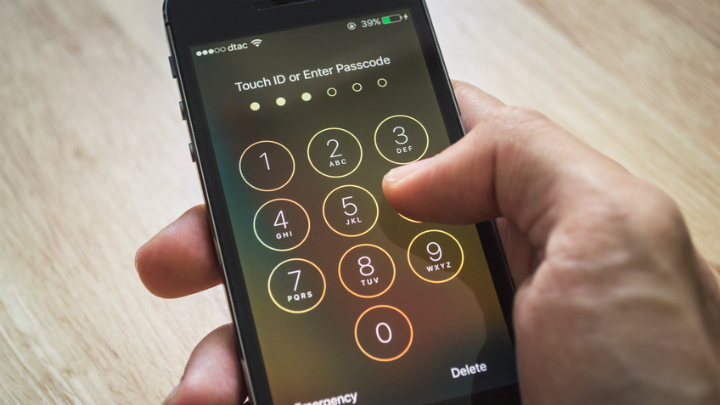
Ideally, do not permit individuals to offer 4-digit PIN numbers for verification passwords.


 accesscontrol